
For lovers of European antiquity, the Loire Valley is a rich and glorious destination. There are countless chateaux and cathedrals to visit, many dating back to the 12th and 12th century. It’s easy to envision what noble life was like as far back as the Middle Ages here in the aptly named “Garden of France.” These grand estates dot the lush countryside, where once royalty hunted, rode on horseback and had magnificent parties in the same halls you’ll be able to tour. From the opulent Châteaux de Chambord to the world-famous, and incredibly ancient, stained-glass windows of Cathédrale Notre-Dame de Chartre, the architectural marvels of the UNESCO-listed Loire Valley are a must for lovers of architecture, history, the Renaissance and fairytales, in general.
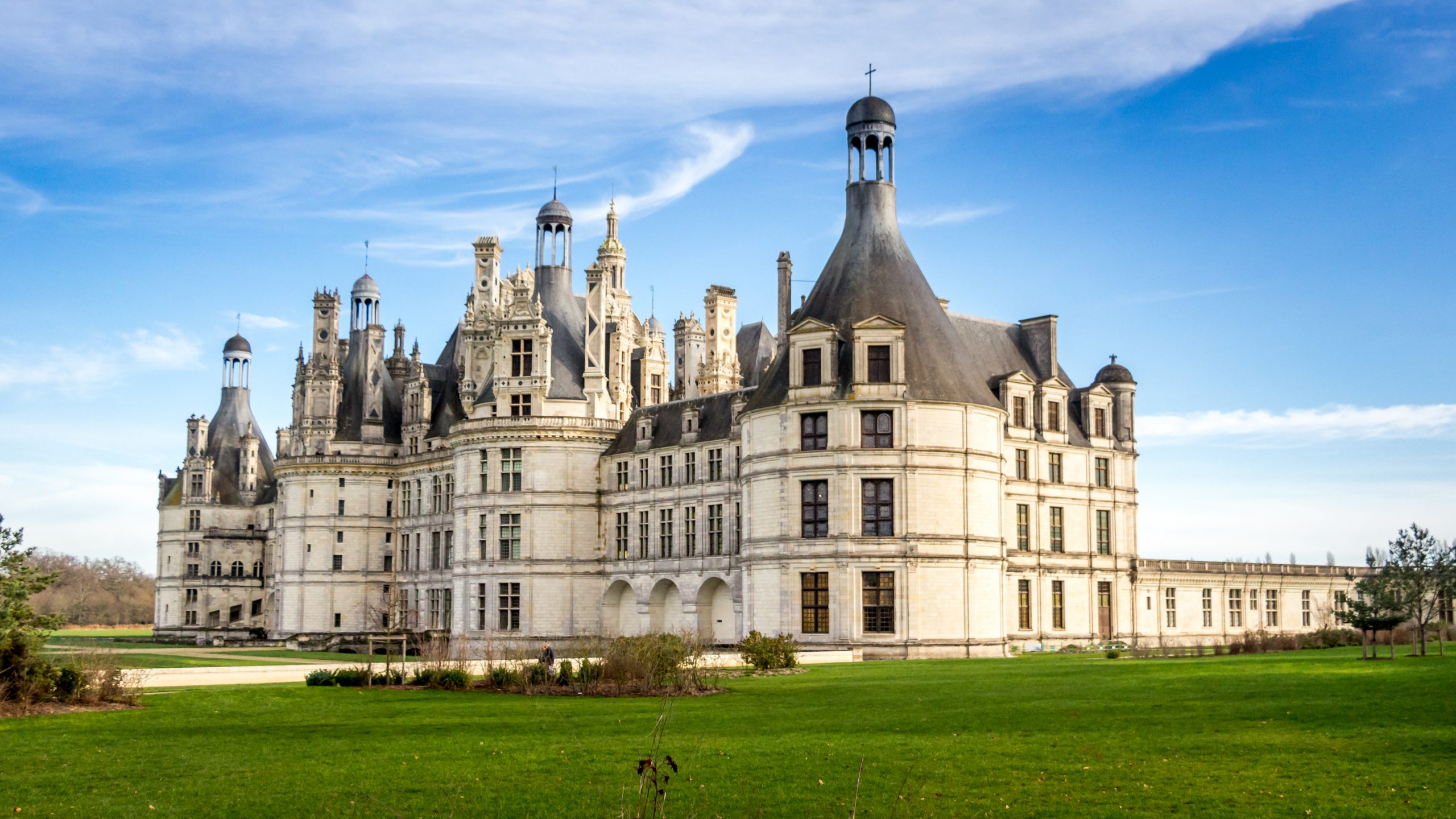
Photo Credit : Shutterstock
1. Châteaux de Chambord
A prime example of Renaissance architecture, the breathtaking Châteaux de Chambord presides over the left bank of the Loire River. Originally the inspiration for the construction of the Château de Versailles, the massive 16th-century estate was created for François I. Marvel at the turret and towers, the huge double-helix grand staircase and the vaulted ceilings throughout the 440 rooms of the estate, where you can easily imagine the lavish parties attended by the likes of Louis XIV and playwright Molière. Stroll about the extensive French formal gardens outside, the Italianate terrace and the acres of parkland and forest.
A prime example of Renaissance architecture, the breathtaking Châteaux de Chambord presides over the left bank of the Loire River. Originally the inspiration for the construction of the Château de Versailles, the massive 16th-century estate was created for François I. Marvel at the turret and towers, the huge double-helix grand staircase and the vaulted ceilings throughout the 440 rooms of the estate, where you can easily imagine the lavish parties attended by the likes of Louis XIV and playwright Molière. Stroll about the extensive French formal gardens outside, the Italianate terrace and the acres of parkland and forest.

Photo Credit : Shutterstock
2. Châteaux de Chenonceau
A welcome variety to the typical masculinity evident in châteaux construction, Châteaux de Chenonceau has been influenced by the many famous women who have lived here. While Henry II had ownership of the estate in the 16th century, his widow, Catherine de Médicis, was responsible for creating the Corps de Logis, which remains the château’s most unique feature. This two-story gallery – full of fine artwork and tapestries – sits on an arched bridge over the Cher River, appearing as if it floats on the surface of the water. Diane de Poitiers was responsible for the exquisite landscaping of her namesake gardens, while Catherine de Médicis again left her mark with the rose trellises of her own garden and walking paths – which today host Nocturnal Promenades, with hundreds of illuminated lanterns casting a romantic glow.
A welcome variety to the typical masculinity evident in châteaux construction, Châteaux de Chenonceau has been influenced by the many famous women who have lived here. While Henry II had ownership of the estate in the 16th century, his widow, Catherine de Médicis, was responsible for creating the Corps de Logis, which remains the château’s most unique feature. This two-story gallery – full of fine artwork and tapestries – sits on an arched bridge over the Cher River, appearing as if it floats on the surface of the water. Diane de Poitiers was responsible for the exquisite landscaping of her namesake gardens, while Catherine de Médicis again left her mark with the rose trellises of her own garden and walking paths – which today host Nocturnal Promenades, with hundreds of illuminated lanterns casting a romantic glow.

Photo Credit : Shutterstock
3. Blois Castle
With 564 rooms, 75 staircases, 100 bedrooms (complete with a fireplace in each room), Blois Castle is yet another outstanding example of Renaissance architecture in France. Louis XII built the oldest section of the château, while François I added the Renaissance section with its open circular staircase. You can see the evolution of architectural styles as you tour the grand estate. In the original kitchens, see sculptures from various parts and different eras of the château buildings.You’ll be wowed by the Stateroom and its ornate columns, a space dating back to 1214 and once used by the counts of Blois as a courtroom.
With 564 rooms, 75 staircases, 100 bedrooms (complete with a fireplace in each room), Blois Castle is yet another outstanding example of Renaissance architecture in France. Louis XII built the oldest section of the château, while François I added the Renaissance section with its open circular staircase. You can see the evolution of architectural styles as you tour the grand estate. In the original kitchens, see sculptures from various parts and different eras of the château buildings.You’ll be wowed by the Stateroom and its ornate columns, a space dating back to 1214 and once used by the counts of Blois as a courtroom.

Photo Credit : Shutterstock
4. Châteaux de Cheverny
Perfectly symmetrical when it was built in the first half of the 17th century, Châteaux de Cheverny is a vision of gleaming white stone, surrounded by English-style gardens, giant redwoods and cedar trees. Tintin fans will notice similarities to the fictional Château de Moulinsart (Marlinspike Hall) in Hergé’s comic books. The same family lived here for more than six centuries, finally opening the estate to the public in 1922. Tour the grand halls and rooms of the chateau, each with original furniture and decor, including a 17th-century Gobelin tapestry and Louis XIV chest.
Perfectly symmetrical when it was built in the first half of the 17th century, Châteaux de Cheverny is a vision of gleaming white stone, surrounded by English-style gardens, giant redwoods and cedar trees. Tintin fans will notice similarities to the fictional Château de Moulinsart (Marlinspike Hall) in Hergé’s comic books. The same family lived here for more than six centuries, finally opening the estate to the public in 1922. Tour the grand halls and rooms of the chateau, each with original furniture and decor, including a 17th-century Gobelin tapestry and Louis XIV chest.

Photo Credit : Shutterstock
5. Château d’Azay-le-Rideau (and Nearby)
The fairytale-esque Château d’Azay-le-Rideau sits on an island in the middle of the Indre River, casting a pretty reflection on the placid surface. The 16th-century chateau was designed in the Italian Renaissance style, with a rib-vaulted kitchen and dining room, ornate chimney and tapestries throughout. Discover the romantic and refined chateau, then move on to the nearby Château of Saché, where Honoré de Balzac did much of his writing. Consider, too, visiting Château de Langeais, rebuilt by Louis XIV in 1465 and which still features original decorations and wall hangings from the late Middle Ages.
The fairytale-esque Château d’Azay-le-Rideau sits on an island in the middle of the Indre River, casting a pretty reflection on the placid surface. The 16th-century chateau was designed in the Italian Renaissance style, with a rib-vaulted kitchen and dining room, ornate chimney and tapestries throughout. Discover the romantic and refined chateau, then move on to the nearby Château of Saché, where Honoré de Balzac did much of his writing. Consider, too, visiting Château de Langeais, rebuilt by Louis XIV in 1465 and which still features original decorations and wall hangings from the late Middle Ages.

Photo Credit : Shutterstock
6. Château Ussé
The locals call it Sleeping Beauty’s castle and you will, too, after taking a peek at Château Ussé. it was this castle that Charles Perrault called upon in his imagination when crafting his classic fairytale. Today, visitors play out their own medieval fantasies as they tour the medieval fortress and its Renaissance courtyard. Notice the grand staircase by Julies Hardouin-Mansart, who was also one of the architects of the Château de Versailles, as well as the French formal garden by Versailles landscaper André Le Nôtre.
The locals call it Sleeping Beauty’s castle and you will, too, after taking a peek at Château Ussé. it was this castle that Charles Perrault called upon in his imagination when crafting his classic fairytale. Today, visitors play out their own medieval fantasies as they tour the medieval fortress and its Renaissance courtyard. Notice the grand staircase by Julies Hardouin-Mansart, who was also one of the architects of the Château de Versailles, as well as the French formal garden by Versailles landscaper André Le Nôtre.

Photo Credit : Shutterstock
7. Château de Chinon
In romantic Chinon, châteaux lovers will find the medieval Forteresse Royale de Chinon (Château de Chinon), which dates back to the 10th century. History buffs, take note: Joan of Arc held a vitally important meeting here with Dauphin Charles March 9, 1429, during which he was convinced to send his army to end the siege of Orléans. Take a stroll through the old town, between the château and the Vienne River, noticing the 15th- and 16th-century homes along the Rue Voltaire and the 12th-century Church of Saint-Maurice.
In romantic Chinon, châteaux lovers will find the medieval Forteresse Royale de Chinon (Château de Chinon), which dates back to the 10th century. History buffs, take note: Joan of Arc held a vitally important meeting here with Dauphin Charles March 9, 1429, during which he was convinced to send his army to end the siege of Orléans. Take a stroll through the old town, between the château and the Vienne River, noticing the 15th- and 16th-century homes along the Rue Voltaire and the 12th-century Church of Saint-Maurice.

Photo Credit : Shutterstock
8. Cathédrale Notre-Dame de Chartres
Be sure to add the Cathédrale Notre-Dame de Chartres to your châteaux collection tour. If the town of Chartres isn’t charming enough, you’ll fall in love with the UNESCO-listed cathedral for its French Gothic style and sky-soaring spires. Built across the 12th and 13th centuries, this well-preserved medieval church has inspired many other Gothic cathedrals throughout the continent – you’ll notice similarities with Westminster Abbey, the Cologne Cathedral and Catedral de Leon. It’s the marvelously intricate stained-glass windows – and the sheer number of them – that captures the visitor’s attention. Many of these windows have existed since the mid-13th century – notice, in particular the three rose windows.
Be sure to add the Cathédrale Notre-Dame de Chartres to your châteaux collection tour. If the town of Chartres isn’t charming enough, you’ll fall in love with the UNESCO-listed cathedral for its French Gothic style and sky-soaring spires. Built across the 12th and 13th centuries, this well-preserved medieval church has inspired many other Gothic cathedrals throughout the continent – you’ll notice similarities with Westminster Abbey, the Cologne Cathedral and Catedral de Leon. It’s the marvelously intricate stained-glass windows – and the sheer number of them – that captures the visitor’s attention. Many of these windows have existed since the mid-13th century – notice, in particular the three rose windows.

Photo Credit : Shutterstock
9. Cathédrale Saint-Etienne
The crowning jewel of Bourges, on the Yèvre and Aveyron Rivers in the Berry province, is undoubtedly the UNESCO-listed Cathédrale Saint-Etienne. Like Cathédrale Notre-Dame, it is one of the most impressive French cathedrals from the 12th and 13th centuries. Enter through the south doorway, under the figure of Christ in Majesty, into the sanctuary, where light streams through 13th-century stained-glass windows. Outside, huge towers along the west front reveal five richly sculpted doorways and a beautiful 14th-century rose window.
The crowning jewel of Bourges, on the Yèvre and Aveyron Rivers in the Berry province, is undoubtedly the UNESCO-listed Cathédrale Saint-Etienne. Like Cathédrale Notre-Dame, it is one of the most impressive French cathedrals from the 12th and 13th centuries. Enter through the south doorway, under the figure of Christ in Majesty, into the sanctuary, where light streams through 13th-century stained-glass windows. Outside, huge towers along the west front reveal five richly sculpted doorways and a beautiful 14th-century rose window.