
Take a page out of the history books and visit the fascinating pyramids of Mexico. Although several pre-Columbian civilizations took hold in this area of the world, they all built pyramids. Today’s visitors can follow in the footsteps of the Toltecs, Zapotecs, Mexica and Maya. The most significant pyramids were constructed between around 900 BCE to 1000 BCE and while many are long gone, including those in the Aztec capital of Tenochtitlan, there are dozens of others. From the pyramids of the eastern coast to around Mexico City to Oaxaca, don’t miss these top 10 pyramids in Mexico during your next visit.
1. La Iglesia and El Castillo, Coba

Where: Two hours’ drive from Cancun; 45 minutes’ drive from Tulum; accessible with tour operators also.
What: Between 800 and 1100 CE, the ancient Maya city of Coba shone – and two of its most impressive pyramids, Iglesia and Castillo, remain. Both are half in ruins and draped with vegetation, so you’ll feel a “lost world” ambience from the moment you arrive. The Castillo is the second largest pyramid on the Yucatan peninsula.
2. Castillo de Kukulcan, Chichen Itza
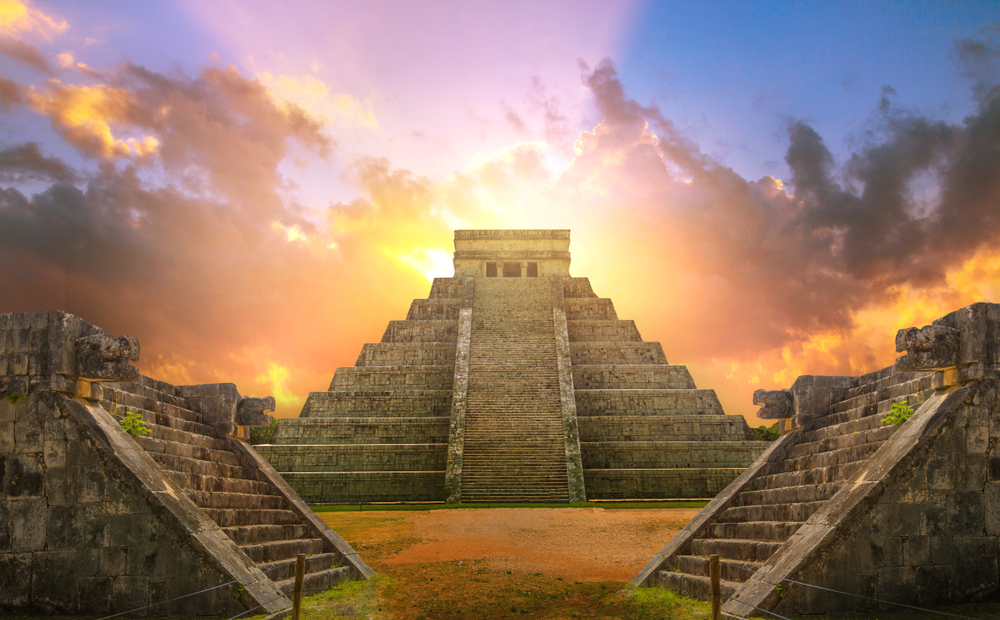
Where: Halfway between Cancun and Merida.
What: With the throngs of tourists around you when you visit this UNESCO World Heritage Site, you’ll feel the bustling atmosphere that once defined the Maya city of Chichen Itza. Between 700 and 900 CE, the pyramid was the centerpiece of the city and served as a calendar. It was famously designed so that during the equinoxes, the sunlight and shadow would intermingle to create the illusion of a snake coming down to Earth. Visitors may tour the Chichen Itza ball courts, temples and palaces, but are no longer permitted to climb the steps of nor access the Temple of Kukulcan on the Castillo.
3. Pyramid of the Magician, Uxmal

Where: A 70-minute drive from Merida along well-maintained highways.
What: There were competing, independent city-states – like ancient Greece – in the Maya civilization, two of which were Chichen Itza and Uxmal. Though the two city-states shared a language and religious beliefs, their architectural styles diverged. If you’ve visited Chichen Itza, you’ll notice the stylized motifs and elaborate details of the Pyramid of the Magician, built in the Puuc style and quite different from the Castillo de Kukulcan.
4. Pyramid of the Inscriptions, Palenque

Where: Notice the elegance of the structures at Palenque in the state of Chiapas. The 89-foot-high Pyramid of the Inscriptions may not be the tallest around, but its temple covered in Maya hieroglyphics is a sight to see. Archaeologists actually believe there are still more wonders to be excavated at Palenque.
What: Accessible from the Palenque airport (twice-weekly flights from Mexico City).
5. Great Pyramid of La Venta
Where: A 90-minute drive from Villahermosa and quite off the beaten path.
What: You’ll have to put in some effort to get to this remote corner of the state of Tabasco, but history buffs will feel the challenge was quite worth it when they visit Mexico’s oldest known pyramid. The structure was built around 900 BCE and sits 100 feet tall. It was made of clay, not stone, and appears today like a rounded hill due to erosion over the ages (it was originally rectangular). La Venta actually served as an example of urban planning for the ancient capitals of Teotihuacan, Tula and others.
6. Mount Alban Pyramids
Where: Five miles from Oaxaca; accessible by bus or taxi.
What: The state of Oaxaca was the center of the Zapotec civilization and Mount Alban their capital. Visit the ancient site’s short pyramids, that more resemble platforms with temples atop them. There are several tombs and stone carvings to marvel at as well in this historic Mesoamerican city.
7. Pyramid of the Niches, El Tajin
Where: Four-hour drive from Veracruz.
What: Dating to around 900 CE during the late classic period, El Tajin was one of the most important sites in the state of
Veracruz. The ancient ball games and ball courts you hear of from this era largely took places here – more than 60 ball courts have been unearthed. The Pyramid of Niches is quite unusual with its short stature (59 feet high) and six platforms, carved as if to track the days of the year. These decorative niches were originally painted black against the dark red of the pyramid to deepen the shadows.
8. Great Pyramid of Cholula
Where: Four miles outside Puebla.
What: First, spend some time in Puebla at the International Museum of the Baroque and enjoying its famous cuisine, then make your way to the largest pyramid in the world (in terms of volume). There’s even a 16th-century church atop it. You’ll be able to get into some of the restored sections as well as explore five miles of excavated tunnels in the surrounded ancient city.
9. Pyramid of the Sun and Pyramid of the Moon, Teotihuacan
Where: An hour north of Mexico City.
What: When the Aztecs came upon this area, they, too, wondered at the incredible civilization that could have responsible for the construction of monumental Teotihuacan. In its heyday, between approximately 100 BCE and 550 CE, the influential Mesoamerican city had a population of nearly 200,000 residents. Look for the Pyramid of the Sun (you can’t miss it!) and the Pyramid of the Moon along the Avenue of the Dead. The Pyramid of the Moon was built between 200 and 450 AD, dedicated to The Great Goddess, and is designed to emulate the contours of nearby mountain Cerro Gordo.
10. Pyramid of Quetzalcoatl
Where: A 90-minute drive from Mexico City or just under 2 hours’ drive from Queretaro.
What: With its 13-foot-tall Toltec warrior statues and colonnade, the Pyramid of Quetzalcoatl in Tula (or Tollan) is the most impressive structure on the site. Don’t miss the palace, ball courts and ceremonial plaza that also date to between 950 and 1150 CE.