
When we think beautiful bodies of striking, turquoise water, we often imagine the Caribbean Sea or the Mediterranean. However, you needn’t travel all that far for these wondrous waters – the United States has its fair share of crystal-clear, jaw-droppingly pretty lakes. Many of these large lakes were formed from glacial movement in the Ice Age and the vibrant blue-green you see is the result of ancient minerals and natural springs. From Lake Tahoe to Lake George, here’s where you can swim in shimmering, azure water close(ish) to home.
Lake Tahoe, California/Nevada
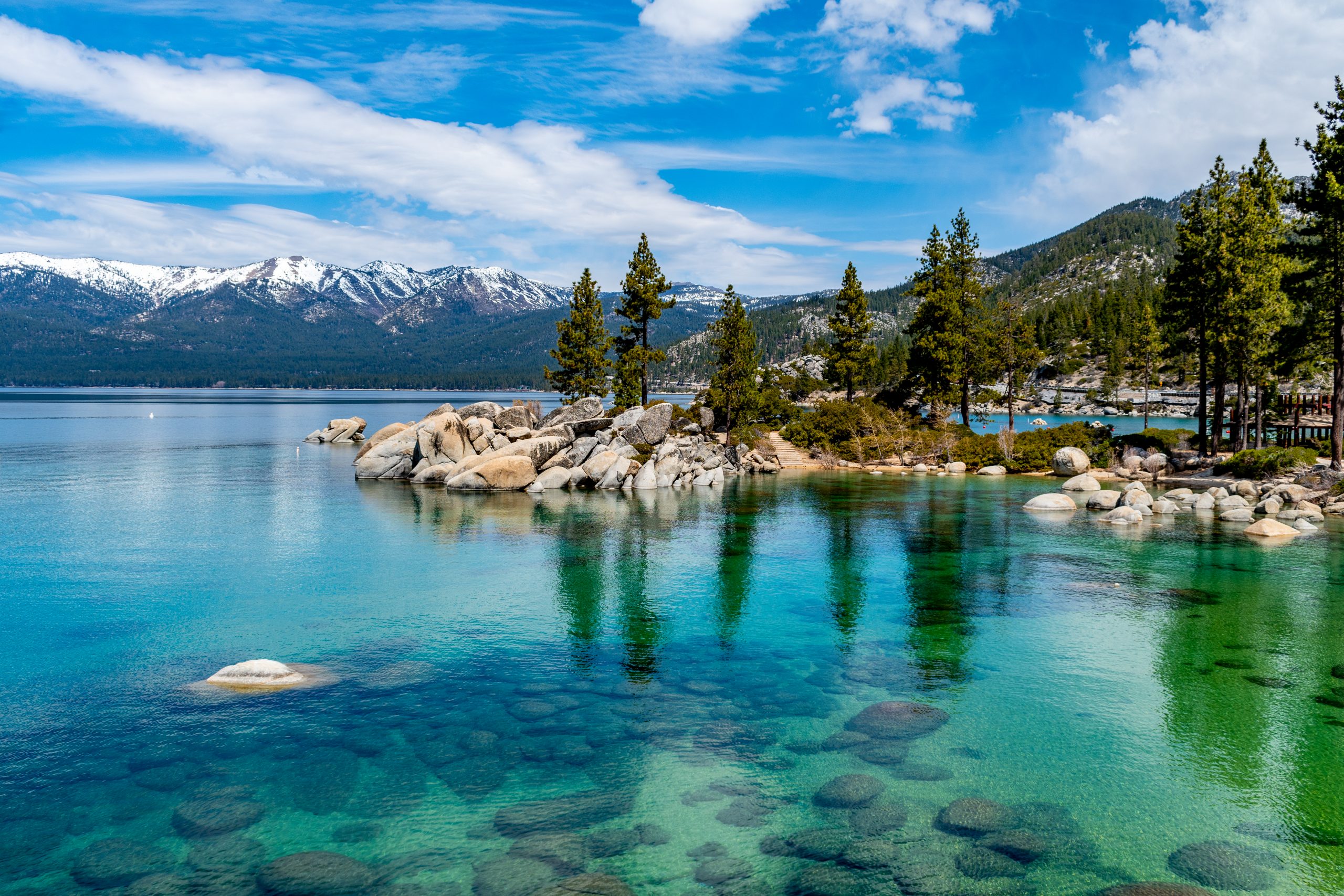
You have to see it to believe it when it comes to Lake Tahoe. This gorgeous, crystal-clear ancient lake has some of the purest water in North America. The lake, in the Sierra Nevadas, is 1,645 feet deep at its deepest and sits at an elevation of 6,225 feet above sea level. Swim, kayak, paddleboard or hike around to get the best views of this incredible water. For the best swimming options, try North Lake Tahoe, where you’ll find Sand Harbor Beach or Tahoe South, where you’ll find family-friendly Regan Beach. Care to dive in the clear waters? Check out boat, launch and barge wrecks in Emerald Bay State Underwater Park.
Crater Lake, Oregon
The once massive Mount Mazama violently erupted about 7,700 years ago, creating a caldera and leading to the formation of Crater Lake. Famous for its deep azure, clear water, the lake is the deepest in the United States. There is virtually no pollution in the lake because it is fed by rain and snow only. Take a guided cruise on the lake, searching for the “Old Man of the Lake,” a 30-foot tree stump that can be found bobbing in the water at varying spots throughout the year. You’ll also get a look at Wizard Island, formed from a cinder cone after the eruption.
Lake Coeur d’Alene, Idaho
The west seems to be full of these pristine, crystal-clear lakes left behind from the glaciers of the Ice Ages. This includes Lake Coeur d’Alene, a gorgeous 25-mile-long lake lined with beaches and forests. Check out the North Idaho Centennial Trail, a recreational trail that follows the Idaho and Washington state line to Higgens Point, look for bald eagles and don’t miss the mesmerizing sunsets.
Lake Chelan

Flathead Lake, Montana

Flathead Lake is the largest natural freshwater lake west of the Mississippi River. It’s 28 miles long and 15 miles at its widest, offering ample recreational opportunities, from sailing to picnicking to swimming to fishing. From here, you can venture out to see the surrounding sights in the Swan and Mission Mountains as well as in nearby Glacier National Park. If you’re here in the summer, don’t miss the cherry orchards and golf courses or the wildlife refuge on Wild Horse Island, home to 75 species of birds, as well as deer, bighorn sheep, coyotes and beer.
Hanging Lake, Colorado

Hanging Lake is an example of a lake that was formed and then secured by limestone deposits. About an acre and a half of the valley floor sheared off from the fault line, leaving behind this turquoise Hanging Lake, suspended at the edge of the cliffs of Glenwood Canyon. You’ll have to hike in to get here via the challenging Hanging Lake Trail, but this National Natural Landmark is well worth the effort.
Newfound Lake, New Hampshire
New England is known for its myriad lakes and Newfound Lake is one of the prettiest, and clearest. It’s in the Lakes Region of central New Hampshire and boasts the purest fresh water in the state. The lake is refreshed twice a year by eight underground springs. Visit Wellington State Park on the lake’s west shore for a great swimming beach. Get a different view when you rent a kayak or canoe from Paradise Point and paddle out on the water.
Torch Lake
A favorite summertime destination of those living in the upper Midwest, Torch Lake was named Lake of the Torches by the Ojibwa Tribe. The tribe used to light torches to attract fish at night, hence the name. The shimmering, turquoise-colored lake is part of the Chain of Lakes, a series of 14 lakes and rivers throughout Michigan. If you add in the five Lower Chain lakes, you’ll have access to 100 miles of boating, swimming, sailing, windsurfing and kayaking.
Deer Lake, Minnesota
Known as the Lake of the Changing Colors, Deer Lake is the jewel of northern Minnesota. The lake receives most of its water from rainfall and surface and underground springs, making it strikingly clear. On the brightest summer days, the water transforms to a brilliant blue-green color, caused by minerals in the lake.
Green Lake, New York
Within Green Lakes State Park, Green Lake and Round Lake (a National Natural Landmark) offer ample swimming opportunities. You’ll be astounded by the green color of the lake at Blanchard Beach! The glacially created lakes are remnant of the Ice Age and modern-day favorites for rowing, kayaking, swimming, birding and more.