
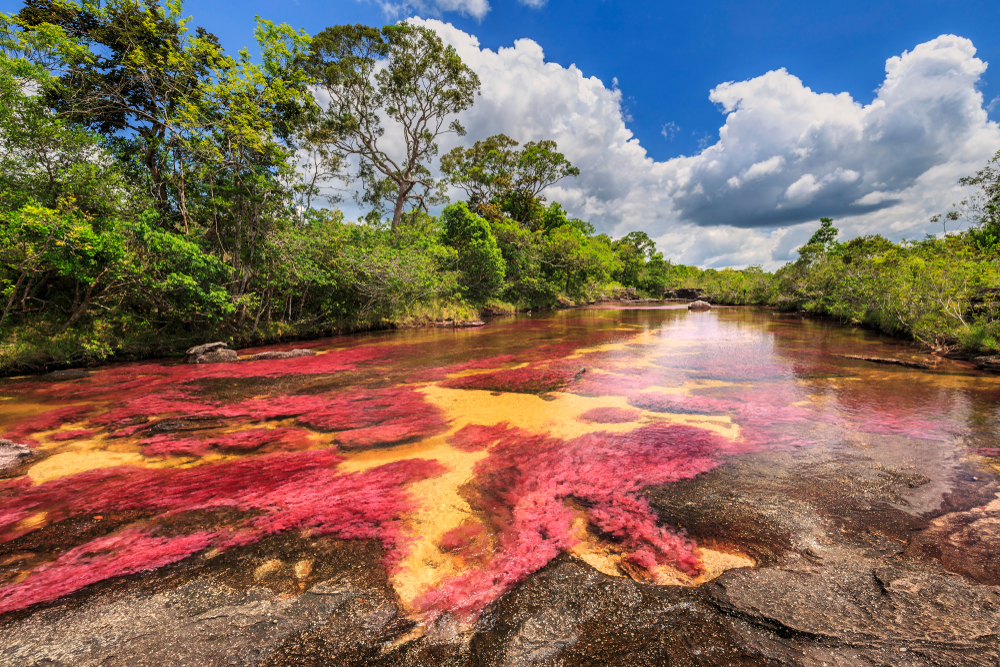
Like something out of the Land of Oz, the Rainbow River in Colombia is just that – a living, flowing rainbow right in front of your eyes. Haven’t heard of it? Here’s what you need to know and why seeing it should be on your travel bucket list. As a bonus, we’ve added a few other must-see attractions in the area, if you have the time and inclination.
What Is the Rainbow River?
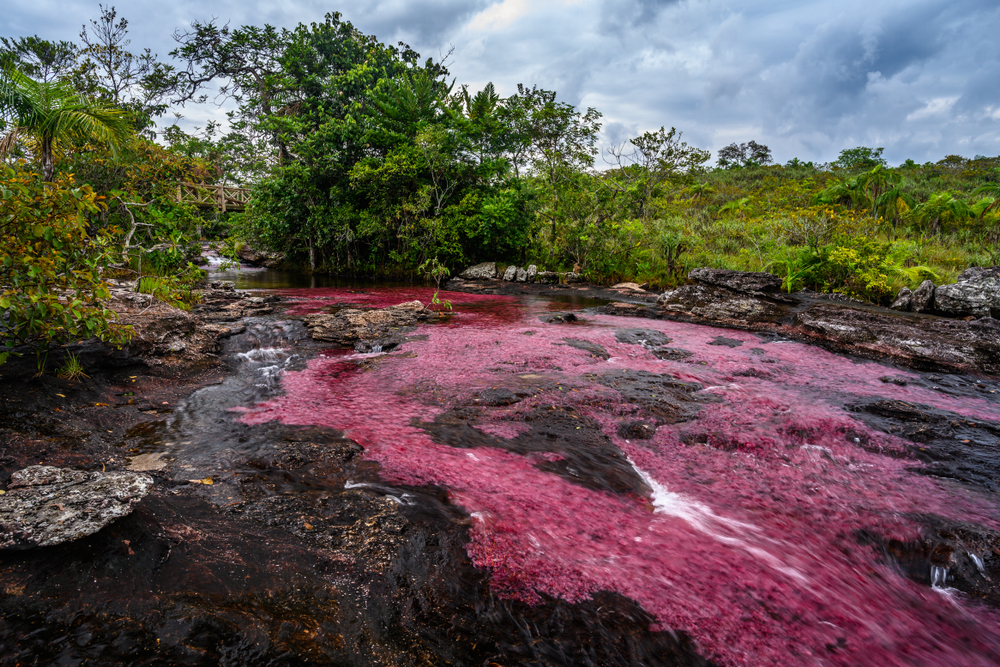
The Rainbow River (Caño Cristales) in La Macarena, Colombia is also known as the “Liquid Rainbow” or “River of Five Colors” – and it’s easy to see why. Looking at the river, you’ll see bright hues of green, yellow, red and purple flowing before you, changing depending on the light and water conditions.
Why does it look like this? An endemic red aquatic plant, called Macarenia clavigera, grows in the riverbed here and attaches itself to the rocks where the current is the strongest. The other colors stem from the black rock, green algae, blue water and yellow sand. Sometimes, you’ll see bright blue, hot pink, vibrant orange and deep maroon. The Macarenia clavigera is sensitive to its environment and how sunny it is. Plus, the river level must be high enough, but not too high, such the plants are thriving. When the conditions are right, the eye-catching colors create a dramatic look as the crystal clear water flows over waterfalls, into pools and in and out of caverns. And because conditions change, if you’ve seen the river one day, it may look different the next.
Where Is the Cano Cristales?
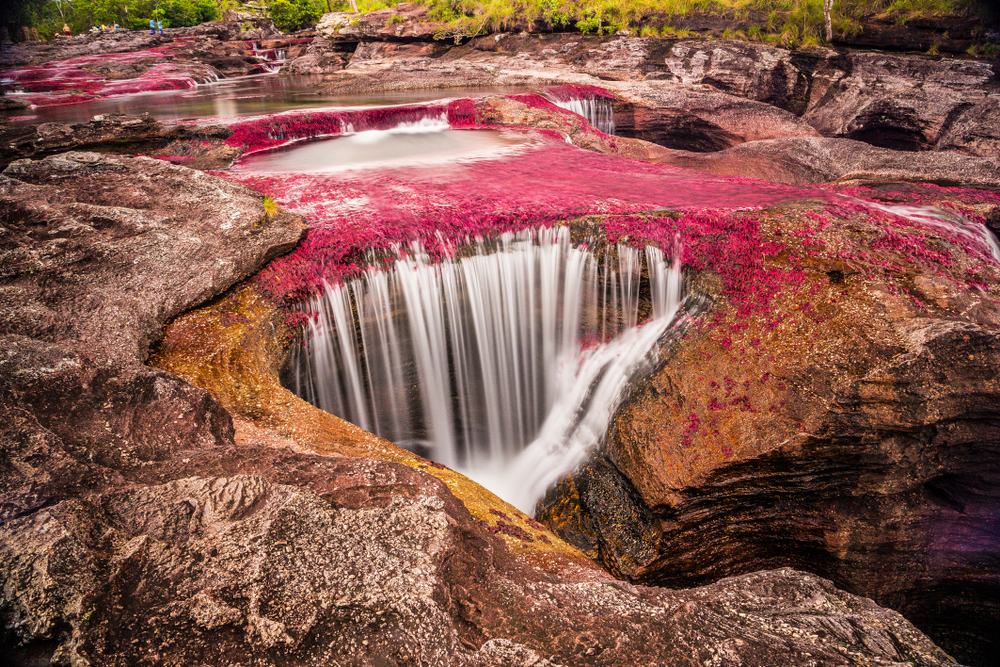
The Rainbow River is in the Sierra de la Macarena National Park,, the meeting area of the Amazon, Orinoco and Andes regions. It’s surrounded by majestic waterfalls, wild-swimming spots, ancient rock formations and biodiverse jungle.
When Can I See the Rainbow River?
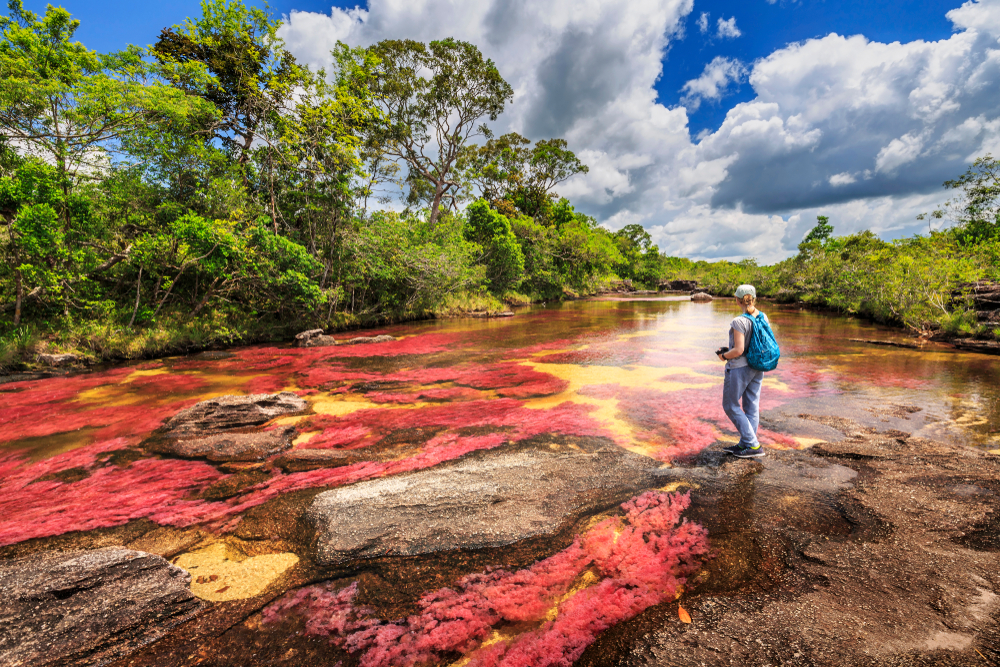
The most vibrant river color is usually between September and November. The rest of the year, the river may be fairly indistinguishable from other waterways. The peak viewing season for this natural phenomenon is between the wet and dry seasons, when the water level is just right and the Macarenia clavigera turns bright red. During the wet season, the water is too fast and too deep, so the plant doesn’t get the sun it needs to turn red. And during the dry season, the river is not full enough and the aquatic plant life is not well supported and can die.
How Do I Get to the Rainbow River?
You will first fly or take the bus from Bogota to Villavicencio in central Colombia. From there, you’ll take a chartered flight to the small town of La Macarena. Here, you’ll need a guide to take you into the Serrania de la Macarena, the remote mountain range and national park within which you can access the river. Once there, you can stay awhile, even swim in designated areas (without sunscreen so as not to harm the fragile ecosystem), but visitors are not allowed to cook or spend the night.
What Else Can I Do Near the Rainbow River?
Look for Bears in Sumapaz Paramo
Less than a two-hour drive from Bogota, you’ll enter the tundra-like landscape of the Sumapaz Paramo National Park. Unfriendly though it may be, with low-lying clouds and cold misty rain, the region has the distinction of being the world’s largest alpine tundra ecosystem. South America’s only surviving native bear species – the spectacled bear – makes its home here amidst the frailejones, a type of subshrub in the sunflower family.
The park area was once considered a sacred region for the indigenous Muisca people. The alpine tundra itself is an important water source for the Bogota savannah – it rains here much of the year and the soil is often saturated. This near-constant moisture makes for tough tourist conditions – it’s hard to see through the thick vegetation and easy to get stuck in the mud and shallow bodies of water without warning.
The drive is an hour and 45 minutes from the center of Bogota. Drive through Usme until you reach the Chisaca lagoon, which marks the border of the Sumapaz Park.
Go to Mars (Or, Just Feel Like You Did)
The Tatacoa Desert of Colombian has such an otherworldly feel that you may think you’ve stepped into the page of Ray Bradbury’s Martian Chronicles. The Tatacoa surround the small town of Villavieja in the department of El Huila and is defined by rocky, red and gray canyons. The area is actually a dry tropical desert – and not a desert at all. Trees and flowers once flourished here. Today, you’ll notice two landscapes – the Cuzco, a deep mustard color, and Los Hoyos, with ashy grey overtones.
The Tatacoa is known as being one of the most important astronomical observatories in the country. What the observatory lacks in size, it makes up for in knowledge and enthusiasm. Visitors may join the stargazing fun at night, learning the history of the constellation names and using the telescopes. The complete lack of light pollution makes for an incredible camping and skygazing destination.
Fun Fact: Seemingly out of sorts with its arid surroundings, there is a spring-fed swimming pool here. The guests of the various family-run hostels in the area have access to the pool – the staff will even set up eds and hammocks.
To get to Tatacoa, take a bus to Neiva, then take a small vehicle transfer for about $5 out to Villavieja and the desert.
See the View from The Giant’s Hand
If you have time, visit La Mano del Gigante (The Giant’s hand) at 4,855 feet above sea level and affording far-reaching views over the Huila Department. From here, you can see the El Quimbo Dam and El Nevado del Huila. The town of Gigante, below you, is named after Matambo Hill, which looks like a giant’s face lying down.
The massive art piece is attracting tourists left and right, who also come to the area for paragliding and visiting coffee plantations. You can join a tour from Gigante, take a mototaxi, rent a jeep or ride a bike. From the entrance, it takes about 50 minutes to reach the top.